
Notifications
Clear all
CMS policy updates, Medicare and Medicaid programs, quality reporting, HIPAA and privacy regulations, and the evolving federal and state regulatory landscape impacting healthcare operations, IT, and clinical workflows.
1
Posts
1
Users
0
Reactions
80
Views

Topic starter
January 7, 2026 6:54 pm
From Criteria to Execution
What Early State Implementation of RHTP Begins to Reveal
In a previous post, we examined the Rural Health Transformation Program (RHTP) through the lens of federal structure and criteria. That perspective matters because it defines what states are incentivized to prioritize, what funding can and cannot support, and how performance is assessed over time.
As states move from application to implementation, a different set of signals begins to emerge. These signals are less about intent and more about operational reality: timelines, governance, funding pathways, and the tradeoffs states must navigate as they translate federal guidance into action.
This post looks at early implementation details from one state, Oregon, not as a model or endorsement, but as an example of what becomes visible once RHTP criteria meet state-level execution.
When Federal Criteria Meet State Reality
RHTP gives states significant flexibility. That flexibility is often framed as a strength, but it also means the program will look meaningfully different from one state to another.
Early state materials show that implementation quickly becomes shaped by existing governance structures, administrative capacity, definitions of “rural,” and the pace at which funds must be deployed while maintaining accountability.
Oregon’s publicly shared implementation materials illustrate how quickly federal criteria give way to practical considerations such as timelines, sequencing, and oversight once execution begins.
Phased Funding Is Not Just a Design Choice
Oregon’s implementation materials emphasize multiple funding pathways over time, including early funding for projects that can launch quickly and later funding focused on sustainability, coordination, and longer-term system change.
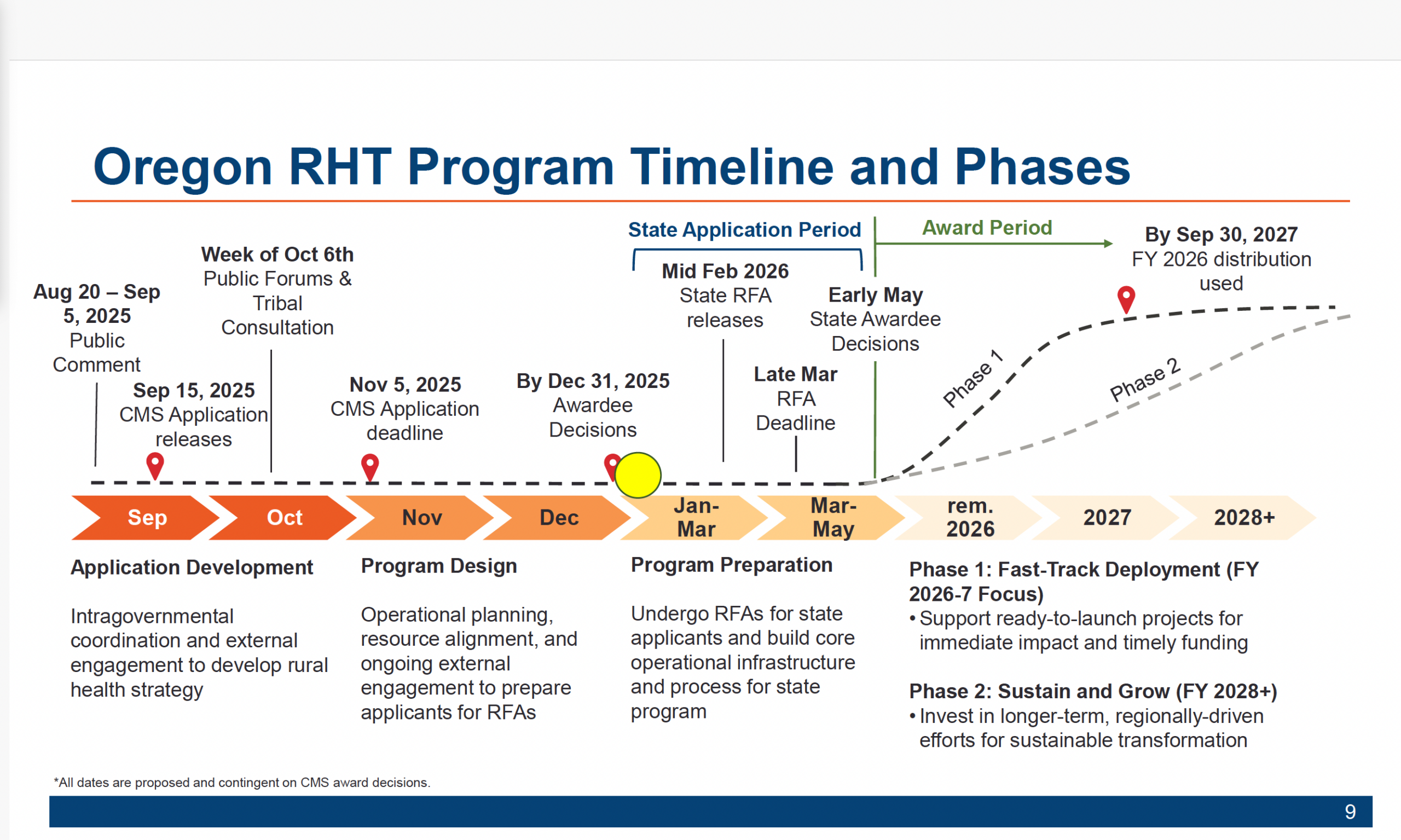
Oregon’s proposed RHTP timeline illustrates how the program is structured across multiple phases, with different expectations and priorities as implementation progresses.
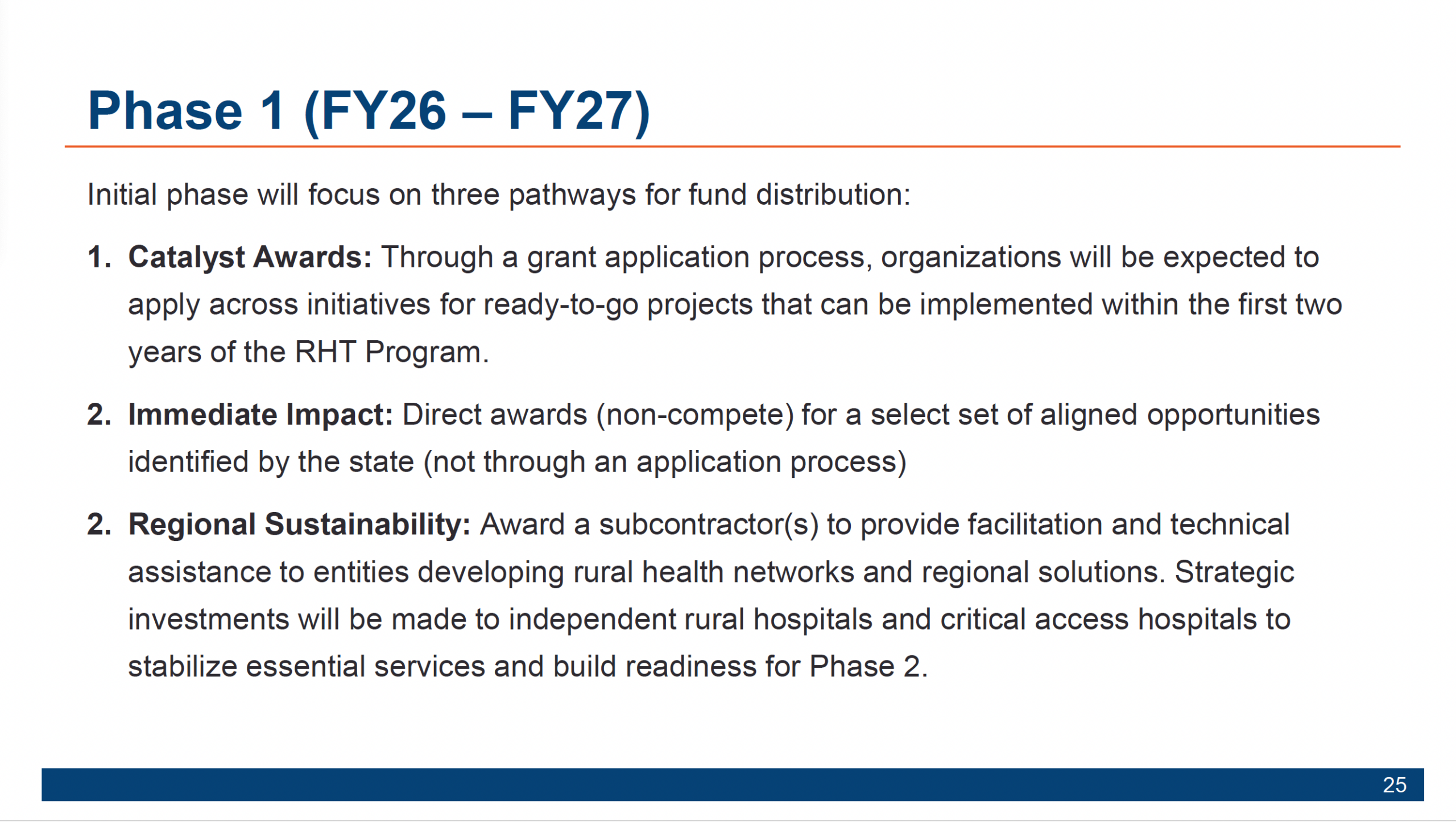
Phase 1 (FY26–FY27) focuses on early implementation, prioritizing initiatives that can launch quickly while foundational structures are put in place.
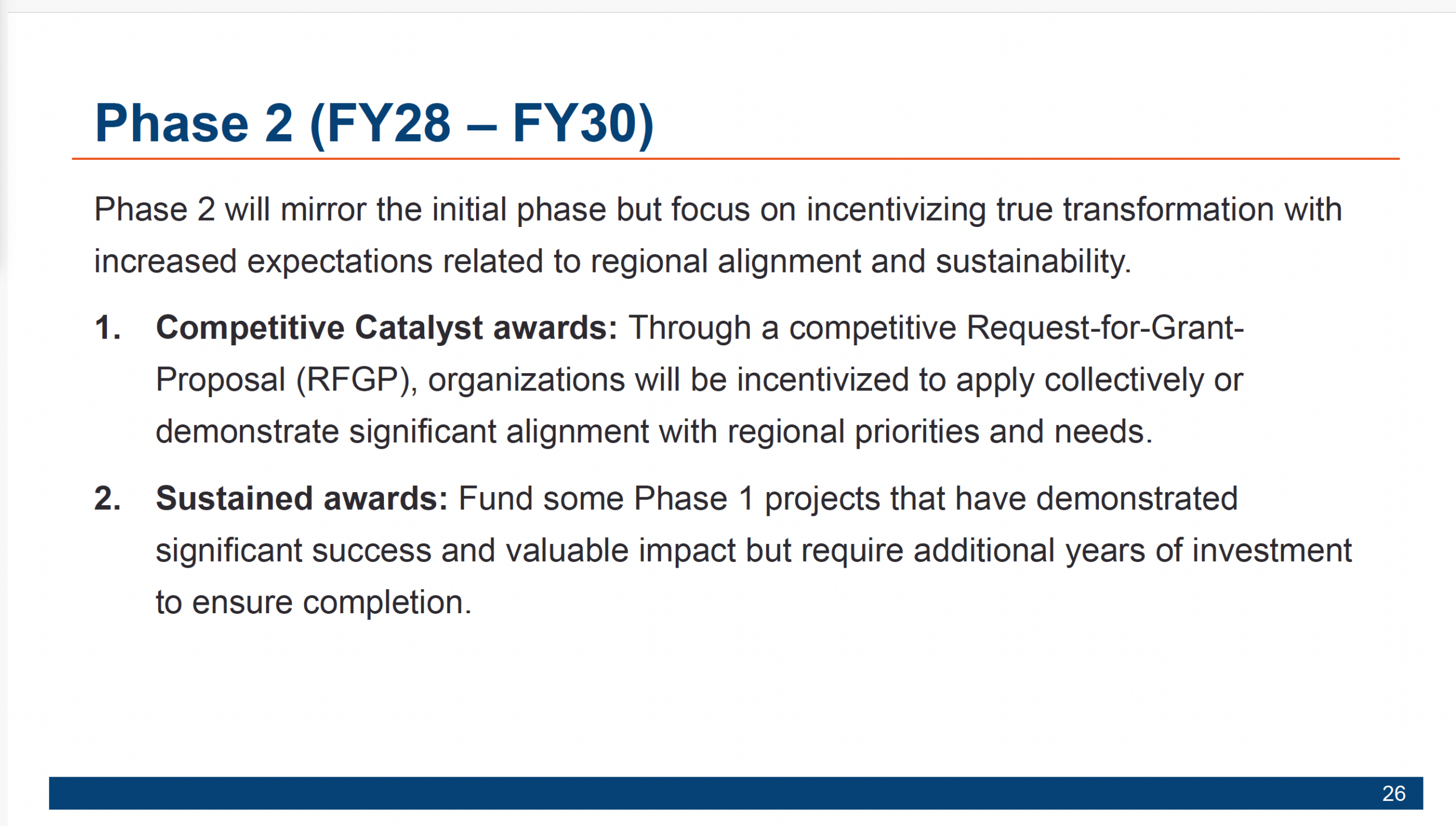
Phase 2 (FY28–FY30) shifts emphasis toward sustainability, coordination, and longer-term system integration.
This staged approach reinforces that not all projects are expected to move at the same pace. For rural organizations, participation opportunities may depend as much on timing and readiness as on alignment with long-term goals.
Where the Money Actually Flows
At the federal level, RHTP funding is often discussed in aggregate. State-level implementation materials begin to break funding down by pathway and initiative, clarifying how resources are allocated over time.
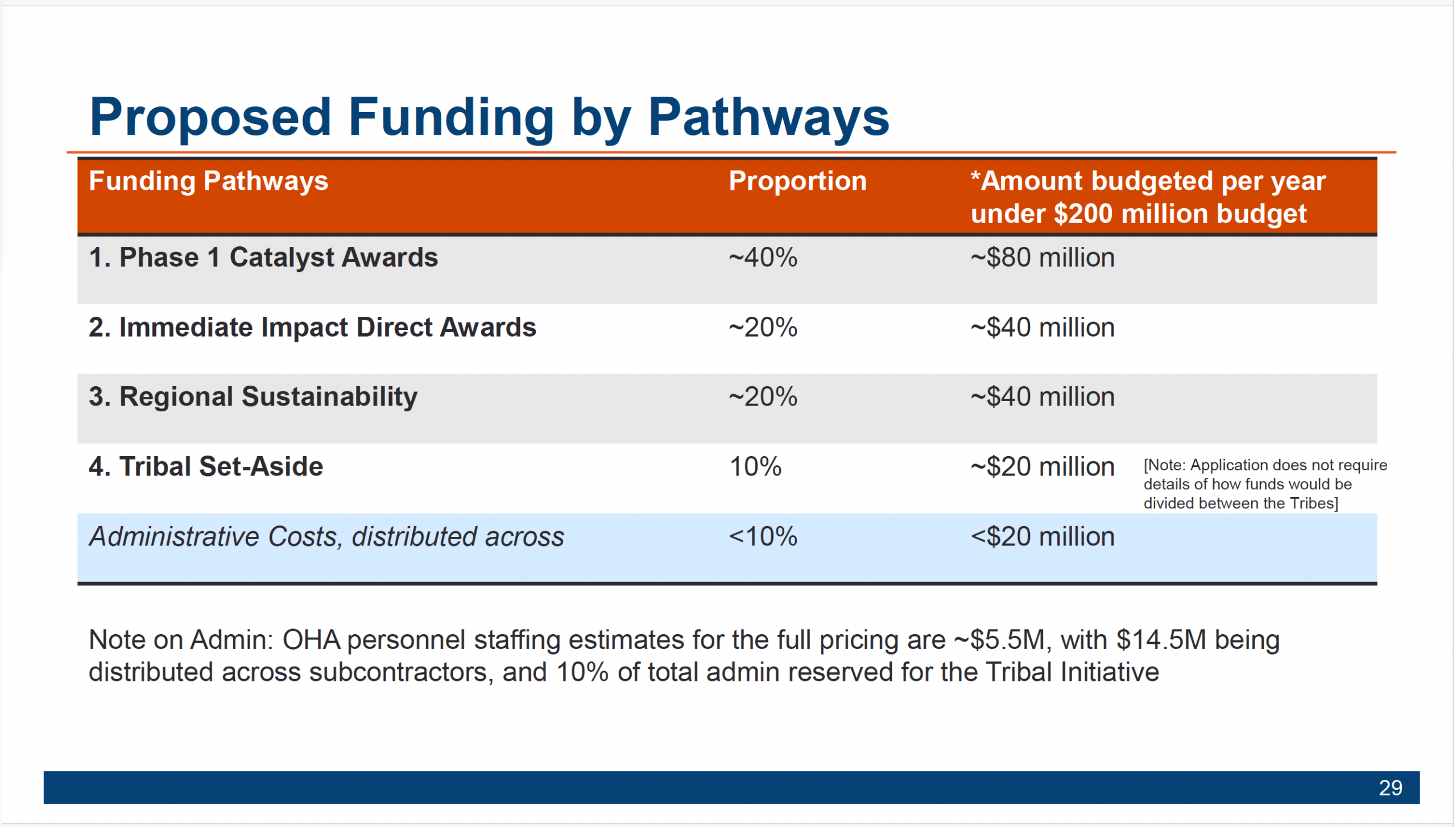
Proposed funding by pathway shows how total RHTP dollars are distributed across different implementation tracks, rather than flowing through a single mechanism.
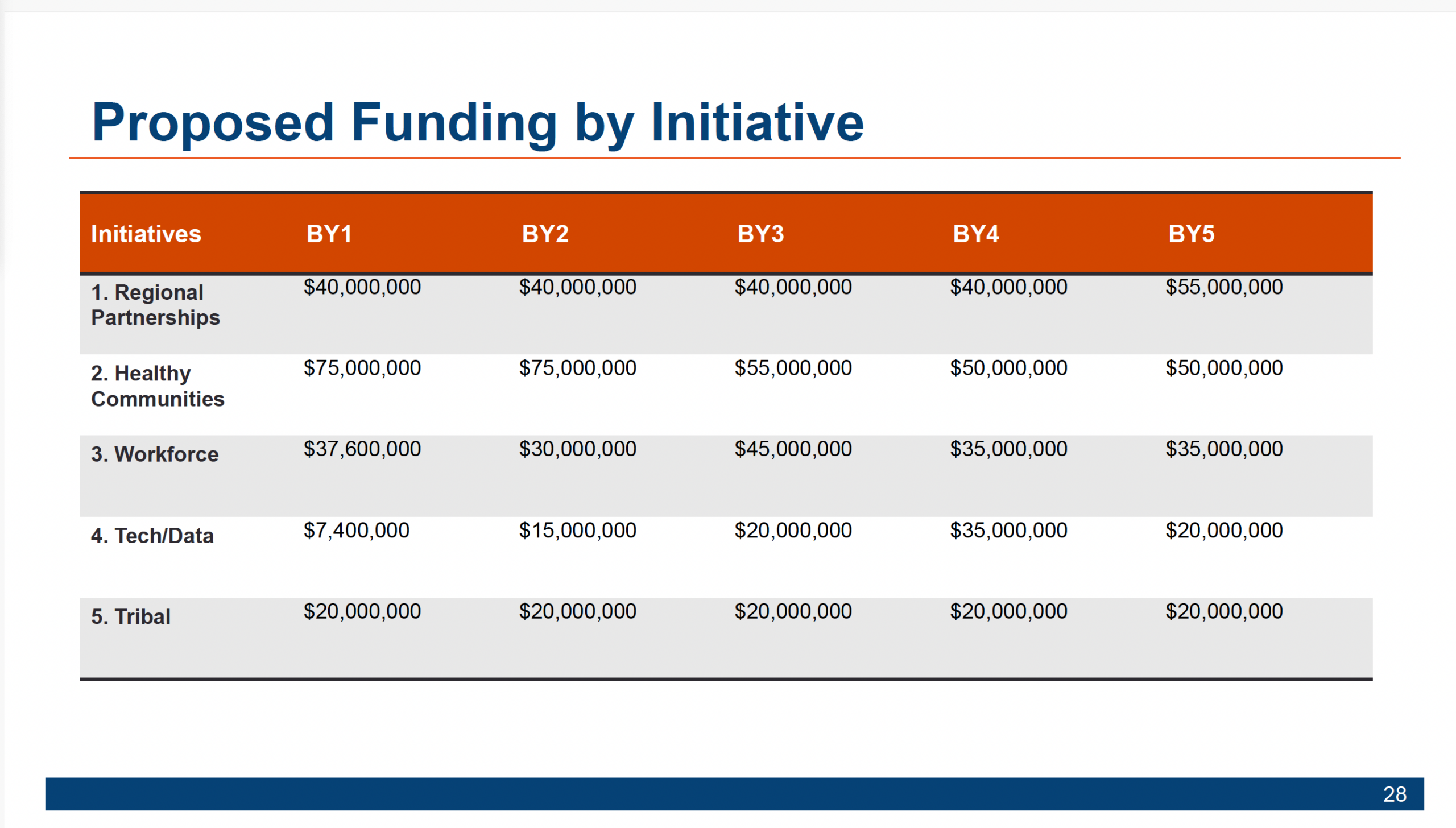
Funding by initiative highlights how resources are spread across program areas, coordination efforts, and supporting infrastructure.
These breakdowns help recalibrate expectations. Not all funds flow directly to service delivery, and administrative, coordination, and planning costs are an inherent part of large-scale transformation efforts.
Definitions Matter More Than They Seem
One of the more practical implementation details that emerges at the state level is how “rural” is defined operationally.
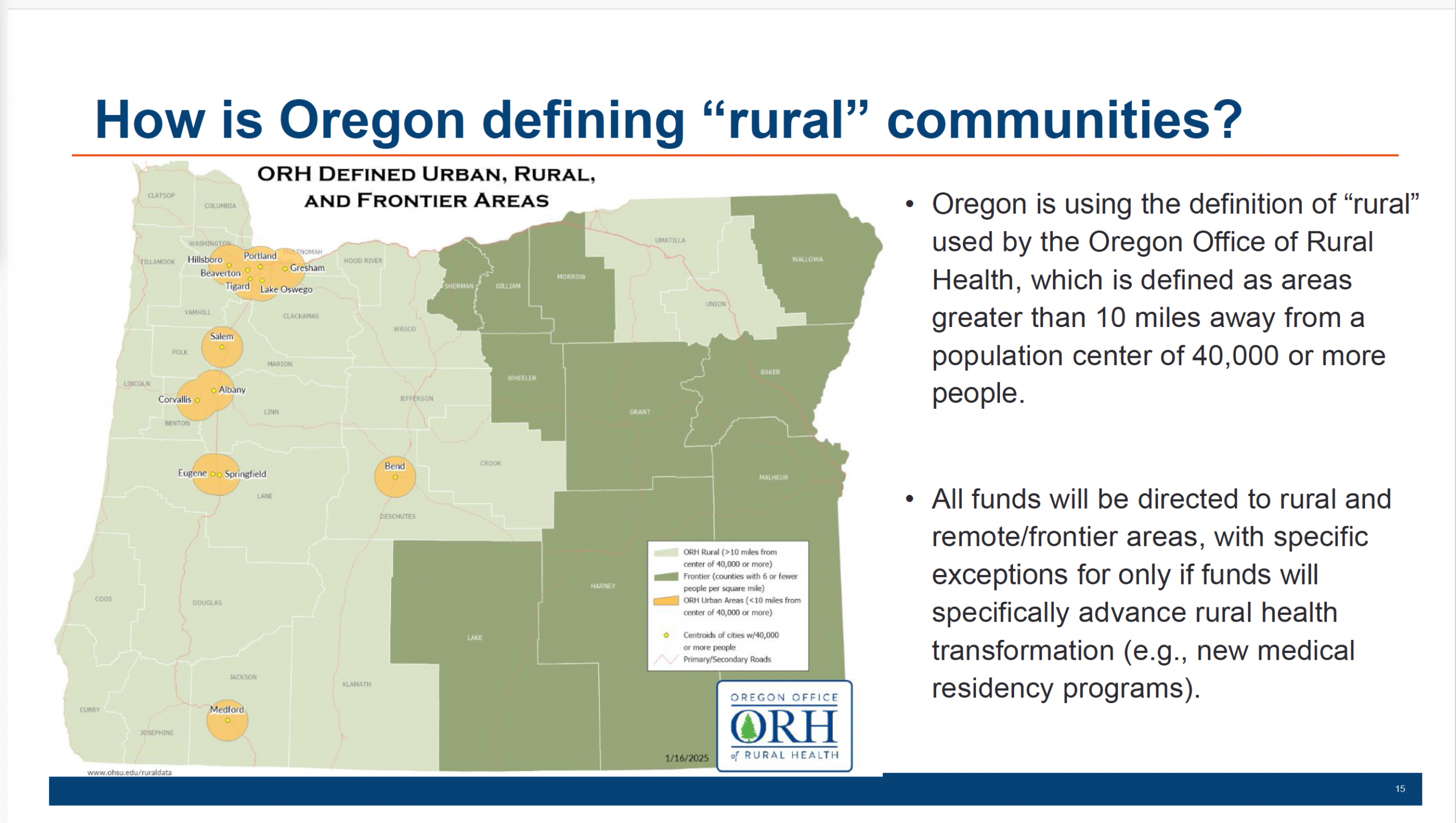
State-specific definitions of “rural” directly influence eligibility, prioritization, and how funding opportunities are distributed across regions.
While federal guidance sets broad parameters, states operationalize those definitions in ways that directly affect which communities qualify and how resources are targeted. These decisions are often technical, but their impact is tangible.
What This Signals for Rural Organizations Elsewhere
Oregon’s implementation materials do not predict how other states will execute RHTP, but they do surface patterns that are likely to recur:
- Implementation accelerates quickly once funding is awarded
- Governance and reporting structures solidify early
- Timing affects access to opportunity
- Federal flexibility translates into state-level variation
For rural providers, administrators, vendors, and partners, this suggests that success under RHTP may depend less on the headline program description and more on understanding how their state is translating criteria into execution.
Looking Ahead
RHTP is still early in its lifecycle. Outcomes will take time to materialize, and implementation approaches will continue to evolve as states learn what works and what does not.
For now, state-level materials provide a useful window into how transformation funding begins to take shape in practice. Watching how different states operationalize similar criteria may ultimately be more informative than any single funding announcement.
#chugusers #CHUGCHAT
Source Material
Oregon Health Authority. Rural Health Transformation Program Implementation Slides, January 6, 2026.